The History of Pinball
From an 18th-century French parlor game to the most banned amusement in New York City — the wild, improbable, and deeply human story of how pinball conquered the world.
It Started With a Ball and a Table
Few games carry as much history on their playfield as pinball. What looks like a noisy machine in the corner of a bar is actually the endpoint of a 300-year journey through French aristocracy, American prohibition, organized crime panic, a landmark courtroom skill demonstration, and a technological revolution that transformed blinking lights into cinematic experiences. Understanding where pinball came from makes every shot feel a little more earned.
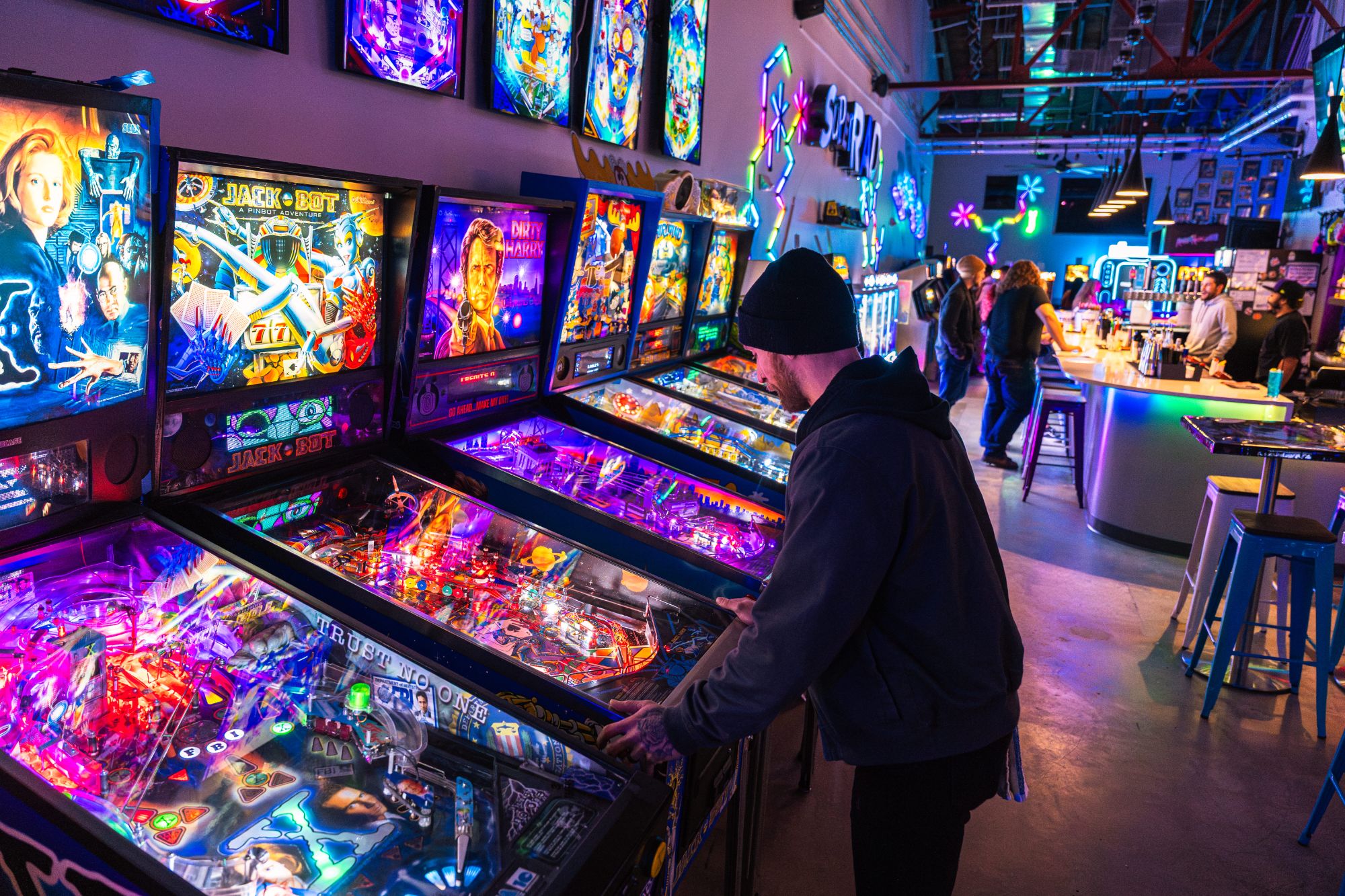
This is the complete timeline — from the bagatelle tables of 18th-century Europe to the nine fully restored machines waiting for you at Super Rad on Glenwood South in Raleigh.
The Timeline: Pinball Through the Ages
Three centuries of silver balls, big scores, and bigger drama.
1700s — Bagatelle: The Aristocratic Ancestor
The earliest ancestor of pinball appeared in France sometime in the mid-1700s as bagatelle — a table game where players used a cue stick to propel a ball up an inclined playfield toward scoring cups or holes ringed with pins. The pins were literal iron nails hammered into the table, which gave the later game its name.
Bagatelle spread across Europe with impressive speed. It was reportedly a favorite of Napoleon Bonaparte, who allegedly kept a table in his military camps. By the early 1800s, the game had crossed the Atlantic to America, where tabletop versions became popular in billiard halls and taverns. The cue stick would eventually disappear, but the tilted table, the pins, and the fundamental joy of watching a ball bounce unpredictably toward a score — those never left.
1930s — Coin-Op Arrives, and So Does Controversy
The modern coin-operated pinball machine was born during the Great Depression. In 1931, a Chicago manufacturer named Raymond Moloney produced a coin-operated bagatelle game called Ballyhoo for his company Bally — a name that would become legendary in the industry. Around the same time, Pacific Amusements released Whiffle, another early coin-op machine.
These early countertop machines were pure chance. There were no flippers, no player-controlled elements of any kind. You dropped a nickel, pulled a spring-loaded plunger, and watched where the ball went. Wins were random. City officials and moral reformers quickly noticed the resemblance to slot machines and began classifying pinball as gambling. The stage was set for a battle that would last decades.
1947 — The Flipper Changes Everything
The single most important moment in pinball history arrived in 1947 when Gottlieb released Humpty Dumpty, the first pinball machine to feature player-controlled flippers. The machine had six of them — three on each side, positioned unusually high on the playfield. They were clunky, unpredictable, and completely revolutionary.
The flipper fundamentally transformed the nature of the game. For the first time, the outcome was not entirely random. A player with good timing, good aim, and good reflexes could demonstrably outperform a player without those skills. Pinball was no longer a gambling device — it was a game of skill. The industry moved quickly on the innovation: by 1950, virtually every new machine shipped with the now-standard two-flipper layout at the bottom of the playfield that we recognize today. The flipper also set up the legal argument that would eventually free pinball from its long persecution.
1940s–1970s — The Bans: New York vs. Pinball
While the flipper arrived in 1947, many cities had already moved against pinball before that innovation could rehabilitate its image. New York City banned pinball in 1942, citing it as a form of gambling and a drain on the nickels of the city's children. Chicago, Los Angeles, and dozens of other cities followed with similar ordinances.
New York's ban was particularly aggressive. Police conducted raids on arcades and bars, confiscating machines and destroying them with sledgehammers on the steps of City Hall. Pinball operators were treated like bootleggers. The machines went underground — hidden in back rooms, operated by some of the same networks that ran other illicit amusements.
The New York ban lasted until 1976. Its repeal came after a remarkable moment: a pinball player named Roger Sharpe was called to testify before the city council and demonstrate that the game required skill. Under the skeptical gaze of council members, he called his shot in advance — exactly like Babe Ruth — and then hit it. The council voted to lift the ban. Pinball was legal in New York City for the first time in 34 years.
1950s–1970s — The Electromechanical Era
The decades between the flipper and the microchip produced some of the most beloved pinball machines ever made. Electromechanical (EM) machines used a maze of relays, solenoids, step units, and mechanical score reels to create an increasingly complex play experience. Every time a bumper fired or a target dropped, a chain of electrical contacts clicked and clattered through the machine's guts to update the score on spinning drums that you could actually hear counting up.
Manufacturers like Gottlieb, Williams, Bally, and Chicago Coin competed ferociously. Playfields gained multiple levels, new target types, multiball precursors, and elaborately themed artwork that turned each machine into its own world. Artists like Gordon Morison created hand-painted backglass art that is now collected as folk Americana. The EM machines had a warmth — a mechanical soul — that many enthusiasts still believe no later technology has fully replaced.
Late 1970s — Solid-State and the Microchip Revolution
The transition from electromechanical to solid-state electronics happened swiftly. Bally introduced the first commercially successful solid-state pinball machine, Eight Ball, in 1977. Within a few years, every major manufacturer had abandoned mechanical relays in favor of printed circuit boards, microprocessors, and seven-segment LED score displays that could show millions of points instead of the mechanical reels' five-digit cap.
Solid-state machines could do things their predecessors could not. Scores ballooned. Rules became dramatically more complex. Speech synthesis arrived: machines began to talk back to you. Gorgar (1979) became the first talking pinball machine, rasping "Me got you" in a synthesized growl that terrified and delighted arcade-goers in equal measure. The machines were faster, louder, and capable of multi-ball play that would have been mechanically impossible before. The pinball experience was becoming an event.
1990s — The Golden Age: DMD and Licensed Themes
The 1990s are widely considered the golden age of pinball, and the technology that defined the era was the dot-matrix display (DMD). Replacing static backglass art with a 128×32 pixel animated screen, the DMD allowed manufacturers to tell stories on the backglass in real time — characters moved, jokes landed, modes were dramatized. Williams introduced DMD technology in 1991 with The Machines: Bride of Pin•Bot, and the format quickly became standard across the industry.
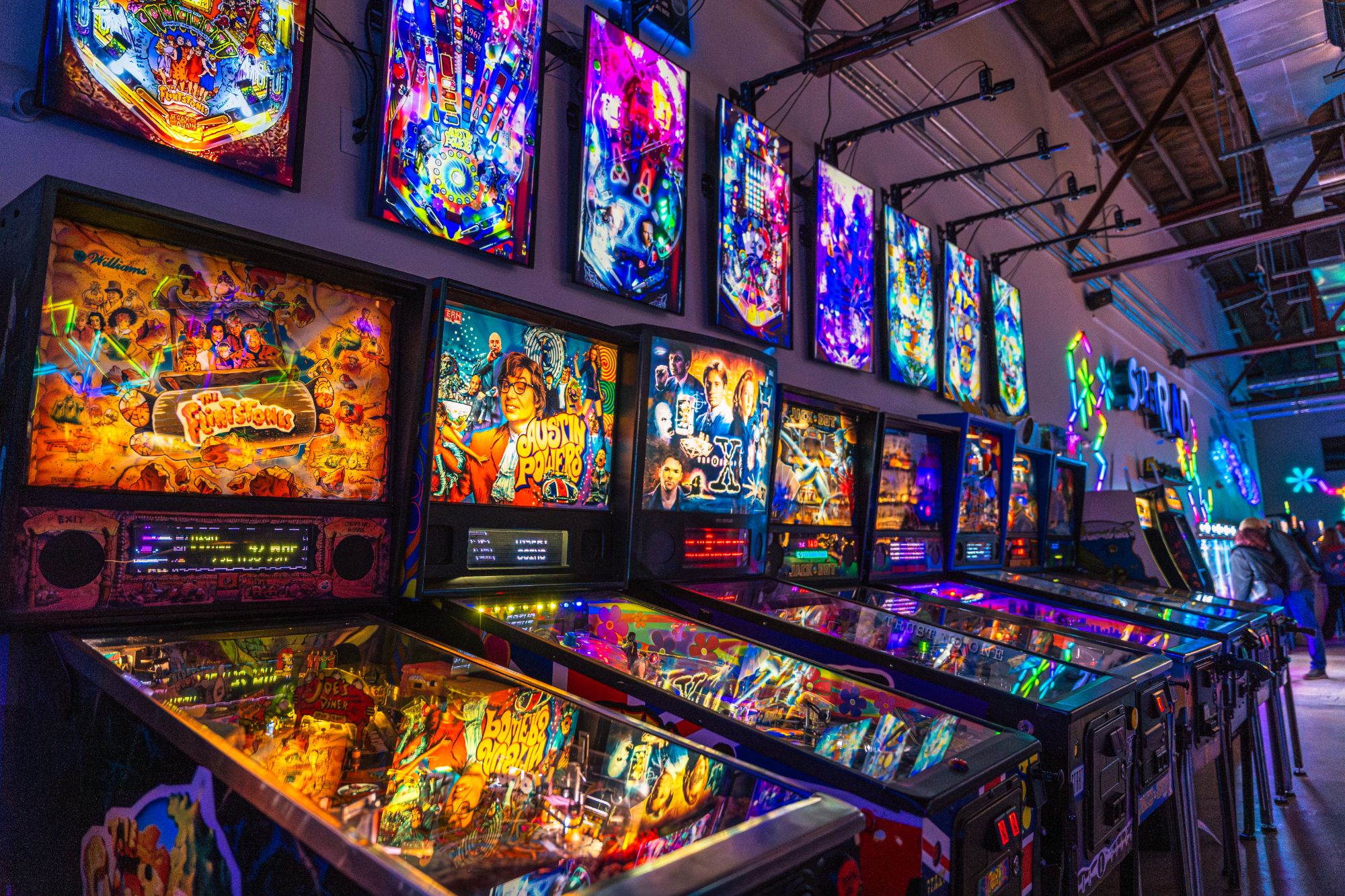
Licensing exploded simultaneously. Studios and IP holders recognized that pinball was a marketing vehicle: The Addams Family (1992) became the best-selling pinball machine of all time. Terminator 2, Star Trek: The Next Generation, Indiana Jones, The X-Files, Cirqus Voltaire, and Medieval Madness turned the arcade into a gallery of pop culture. Rule sheets grew to rival the complexity of board games. This was pinball at its technical and creative peak — and it ended almost without warning.
1999–Present — Near Extinction and the Boutique Revival
In 1999, Williams — the company behind some of the most celebrated machines in history — exited the pinball business entirely. Bally had already been absorbed into Williams. Gottlieb had folded in 1996. An industry that once produced millions of machines a year now had a single major player left standing: Stern Pinball, which had risen from the ashes of earlier manufacturers.
Stern kept the flame alive through the 2000s, producing licensed titles on reduced budgets while the broader market contracted. But something unexpected happened around 2012: a boutique revival began. Jersey Jack Pinball entered the market with The Wizard of Oz, a machine that used an LCD screen instead of a DMD. American Pinball, Spooky Pinball, and Chicago Gaming Company followed. Multimillion-dollar crowdfunding campaigns backed machines from beloved designers. Pinball had become a craft industry, with passionate small-batch manufacturers serving a dedicated collector and bar market. Today a premium new machine can cost $10,000 or more — and enthusiasts line up to buy them.
Why a Real Machine Still Wins
There are pinball apps. There are pinball video games. There are high-resolution digital simulations that render every lamp and ramp with mathematical accuracy. None of them are pinball.
A real machine is a physical object with weight and personality. The solenoids fire with a thump you feel in your sternum. The ball has real momentum, real randomness, real physics that no algorithm can fully replicate. When a bumper rockets the ball toward a lit target, your hands react before your brain does — and that instinctive, full-body engagement is the entire point. Pinball was designed to be played standing up, leaning in, nudging the machine just enough to guide the ball without triggering the tilt sensor. You cannot nudge an app.
There is also the matter of history. Every restored machine carries the decisions of designers, artists, sound engineers, and mechanical engineers who worked decades ago to create something that would surprise and delight strangers. Playing a genuine machine from the 1990s golden age or the electromechanical era connects you directly to that craft. The wear on the playfield, the particular clatter of the flippers, the backglass art glowing in a dim room — it all adds up to something no screen can replicate.
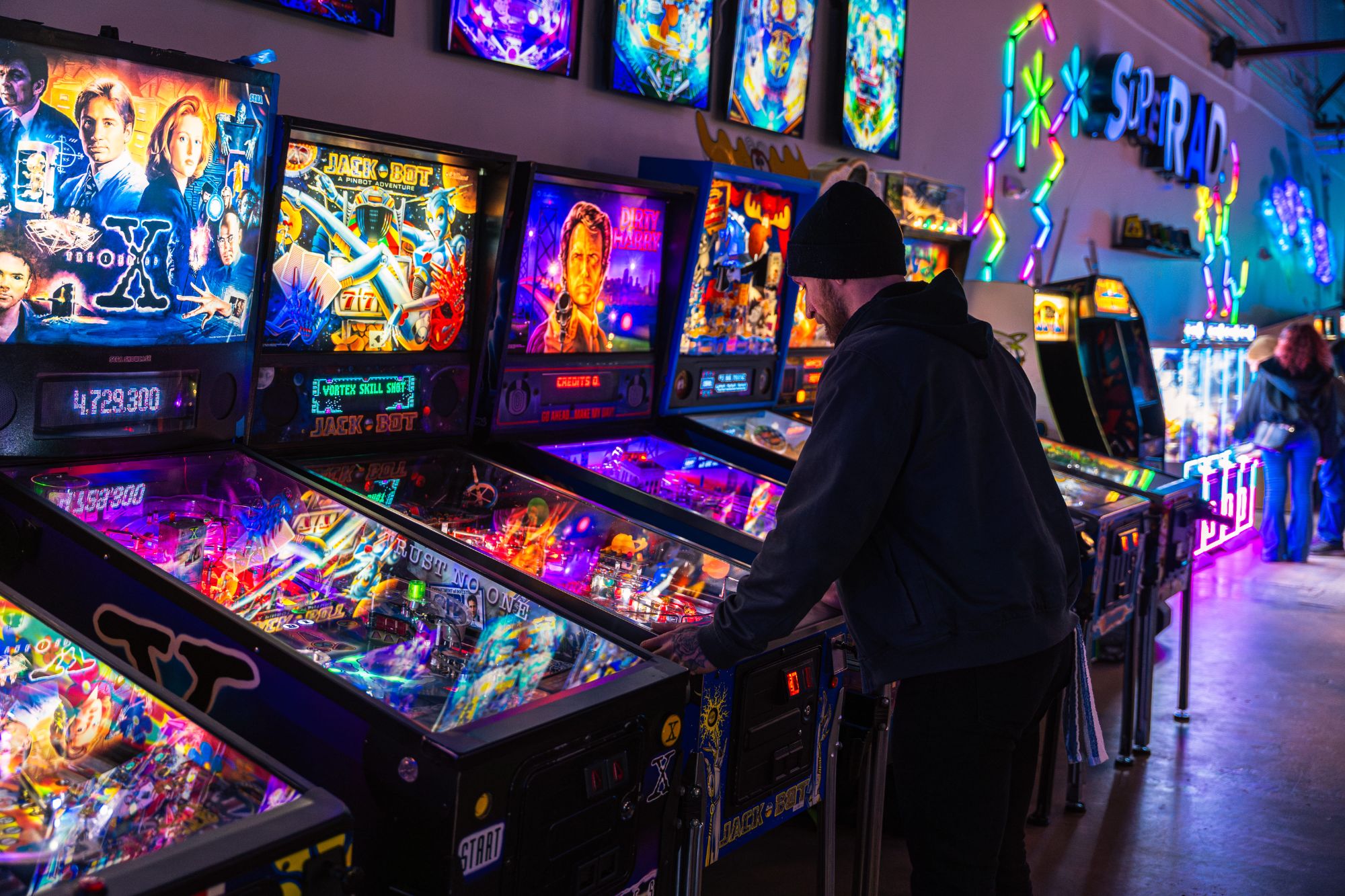
If you have never played a real pinball machine, or if you have not played one in years, the difference is immediately obvious. And if you are in Raleigh, you have nine chances to feel it.
Play the Real Thing in Raleigh
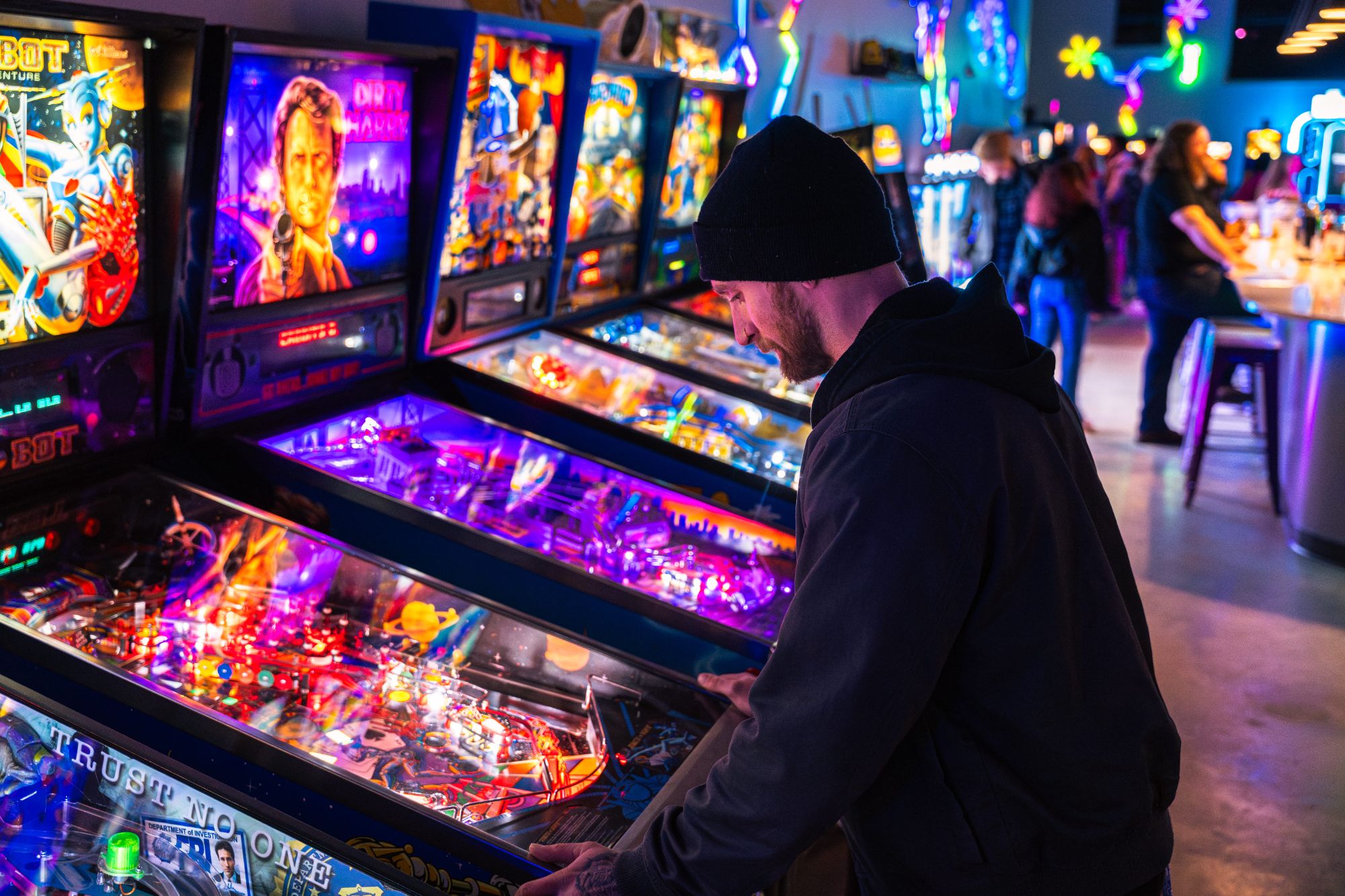
Nine fully restored machines on Glenwood South — each one a piece of history.
Restored to Original Spec
Every machine at Super Rad is restored with period-correct parts. No multicades. No emulation. The real boards, the real solenoids, the real experience the designers intended.
Tournaments Every Month
Whether you are a first-timer or a seasoned flipper wizard, Super Rad hosts regular monthly pinball tournaments open to all skill levels. Step up and find out where you rank.
New to Pinball?
The beginner's guide to pinball will get you started. Learn the basics, understand the rules of each machine, and start building real skills instead of hoping the ball bounces right.
Pinball FAQ
Who invented pinball flippers?
Flippers were invented by Harry Mabs, a designer at Gottlieb, and first appeared on Humpty Dumpty in 1947. Mabs added a pair of electromechanical flippers on each side of the playfield to give players a way to control the ball. The design was immediately copied by competitors, and within a few years the two-flipper layout at the bottom of the playfield became the universal standard we know today. Flippers are the single feature that transformed pinball from a game of pure chance into a game of genuine skill.
Why was pinball banned?
Pinball was banned in New York City from 1942 to 1976, and in many other American cities during roughly the same period, because authorities classified it as a form of gambling. The early coin-operated machines (pre-flipper) offered players no meaningful control over outcomes, and city officials argued that paying a nickel to watch a ball bounce randomly was functionally identical to a slot machine. Concerns about machines being operated by organized crime and about children wasting their lunch money added political pressure. The New York City ban was lifted in 1976 after a skill demonstration by player Roger Sharpe — who famously called his shot in advance to prove the game required skill — convinced the city council to repeal the ordinance.
Is pinball skill or luck?
Pinball is primarily a game of skill, with a meaningful element of randomness. The flipper, multiball saves, nudging, and post passes are all learnable techniques that separate experienced players from beginners — the same ball in the hands of a skilled player will routinely outscore the same ball played without control. That said, the physical chaos of a real machine — random bounces off bumpers, unexpected deflections — means variance is always part of the game. That mix of skill and uncertainty is exactly what makes pinball compelling: you are always improving, and the machine never becomes fully predictable. In competitive pinball, skill wins over a large sample of games; in a single ball, anything can happen.
Come Play History
Three centuries of engineering, artistry, and competitive spirit led to the machines sitting in our arcade right now. Come experience what a real pinball machine feels like — nine of them, fully restored, on Glenwood South in the heart of Raleigh. Tokens included with any visit.